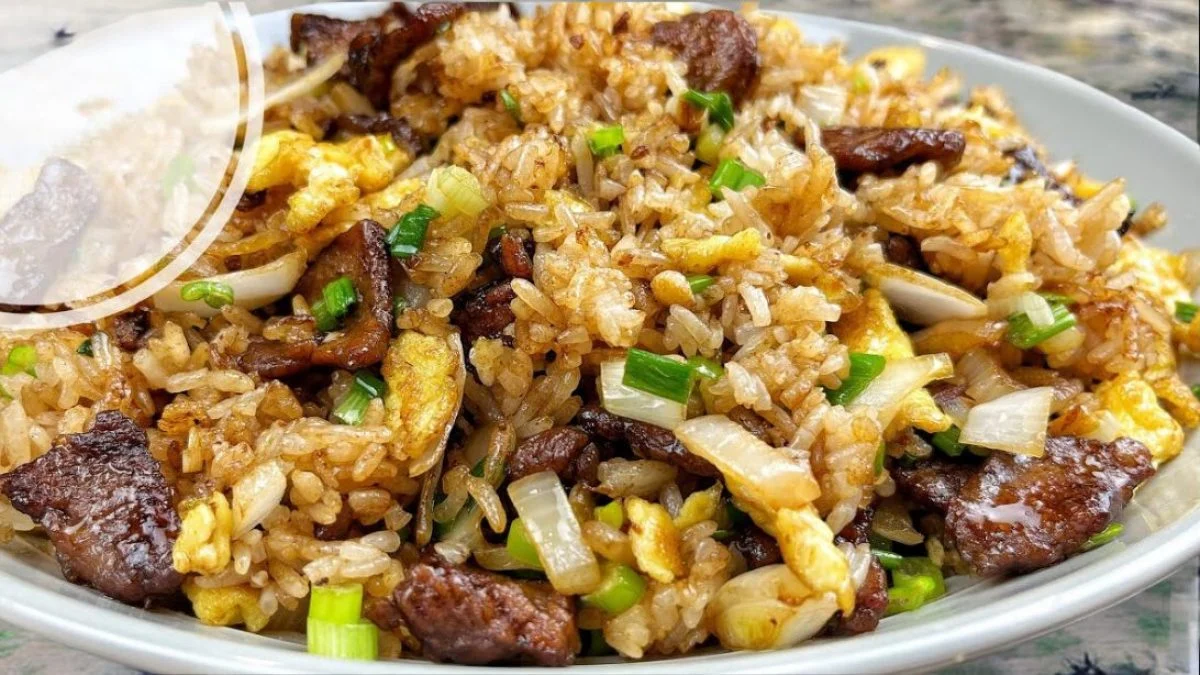
Hey there, fellow food lovers. Picture this: It’s a hectic Tuesday evening, the kids are running around, and I’m staring at the fridge wondering how to turn leftovers into something magical. That’s exactly how I stumbled into perfecting my go-to quick Mongolian beef fried rice. As someone who’s spent years tinkering in the kitchen—growing up with a mom who whipped up Asian-inspired meals on a budget—I’ve learned that the best dishes are the ones that feel indulgent but don’t take all night. This recipe? It’s my secret weapon for busy nights, blending the sticky, savory magic of Mongolian beef with the comforting crunch of fried rice. If you’ve ever craved that restaurant vibe without the delivery fee, stick with me. We’re about to dive into everything from its surprising roots to step-by-step instructions that’ll have you feeling like a wok wizard.
What Is Quick Mongolian Beef Fried Rice?
Quick Mongolian beef fried rice is essentially a fusion of two Chinese-American classics: the glossy, ginger-garlic coated beef stir-fry and the versatile leftover rice dish that’s a staple in takeout menus. It’s not your traditional Mongolian fare—more on that history in a bit—but a speedy home version that combines thinly sliced beef in a sweet-savory sauce tossed with day-old rice, veggies, and eggs for that perfect one-pan meal.
I remember the first time I tried making it; I was skeptical about using ground beef instead of fancy flank steak, but it turned out tender and packed with flavor. The “quick” part comes from using pantry staples and minimal prep, clocking in under 30 minutes. It’s hearty, customizable, and way healthier than ordering out, with about 500 calories per serving when balanced right.
What sets it apart is the caramelized edges on the beef and rice that mimic restaurant-style woks without needing special gear. If you’re new to stir-fries, this is a forgiving entry point—think bold umami from soy and hoisin, balanced with a touch of heat from ginger.
The Surprising History Behind Mongolian Beef Fried Rice
Despite the name, Mongolian beef has zero ties to actual Mongolian cuisine, which favors boiled meats and dairy-heavy dishes from nomadic traditions. It originated in Taiwan during the mid-20th century, when restaurateurs like Wu Zhaonan created “Mongolian barbecue” as a crowd-pleasing stir-fry style to evoke adventure without political baggage from Beijing roots.
By the 1970s, Taiwanese immigrants brought it to the U.S., where it evolved in American-Chinese restaurants like P.F. Chang’s into the sticky, scallion-studded version we know. Fried rice, meanwhile, traces back to China’s Sui Dynasty around 600 AD as a clever way to repurpose leftovers, avoiding waste in a culture that reveres frugality. The fusion of the two? A modern home cook’s dream, born from takeout menus in the ’80s and ’90s.
In my family, we adapted it during college days when takeout was too pricey; my roommate and I would experiment with whatever beef we had, turning it into fried rice to stretch meals. It’s a testament to how immigrant stories shaped American comfort food—accessible, flavorful, and endlessly adaptable.
Why You Should Try Making Quick Mongolian Beef Fried Rice at Home
Making this dish at home isn’t just about saving money; it’s about controlling the ingredients for a fresher, less oily result than takeout. Restaurants often load up on sugar and MSG for that addictive pull, but you can dial it back for a balanced meal that’s still crave-worthy. Plus, it’s a fantastic way to use up fridge odds and ends, reducing food waste while feeding a family of four for under $15.
From a health angle, it packs protein from the beef, carbs from rice, and veggies for fiber—making it a complete dinner. I once made a batch for a potluck, and it vanished so fast that friends begged for the recipe; that lightbulb moment showed me how shareable and crowd-pleasing it is. Emotionally, there’s something satisfying about nailing a takeout dupe—it’s empowering, like reclaiming your kitchen from the delivery apps.
And let’s add a chuckle: The first time I overdid the ginger, it tasted like I was eating a spicy reed from a Mongolian steppe. Lesson learned—balance is key, but mistakes make the best stories.
Ingredients for Quick Mongolian Beef Fried Rice
Gathering ingredients for this recipe is straightforward; most are pantry staples with a few fresh additions for that authentic zing. For four servings, you’ll need about 1 pound of beef, 3 cups of cooked rice, and basics like soy sauce and garlic. Opt for low-sodium soy to keep it from getting too salty, and don’t skimp on fresh ginger—it’s the soul of the dish.
I’ve tweaked this over years, swapping in ground turkey for lighter nights, but the classic calls for flank steak thinly sliced against the grain for tenderness. Veggies like carrots and peas add color and crunch, while eggs bring that scrambled richness. Total cost? Around $10-12, depending on sales.
Here’s a handy table breaking down the key components:
| Category | Ingredients | Quantity | Notes/Tips |
|---|---|---|---|
| Protein | Flank steak or ground beef | 1 lb | Slice thin for quick cooking; freeze 20 mins for easier slicing. |
| Grains | Day-old jasmine or long-grain rice | 3 cups | Cold rice prevents mushiness; leftover is ideal. |
| Sauce Base | Soy sauce, hoisin, brown sugar | ¼ cup soy, 2 tbsp hoisin, ¼ cup sugar | Low-sodium soy; adjust sugar for less sweetness. |
| Aromatics | Garlic, ginger, green onions | 3 cloves garlic, 1 tbsp ginger, 4 onions | Fresh minced; green onions for garnish. |
| Veggies/Eggs | Carrots, peas, eggs | 1 carrot, ½ cup peas, 2 eggs | Julienne carrots; frozen peas work fine. |
| Oils/Thickeners | Vegetable oil, cornstarch | 2 tbsp oil, 2 tbsp cornstarch | High-smoke point oil; cornstarch for crispy beef. |
This setup ensures everything harmonizes without overwhelming your grocery run.
Step-by-Step Instructions to Make Quick Mongolian Beef Fried Rice
Start by prepping your beef: Slice it thin and toss with cornstarch for that signature crisp. Heat oil in a wok or large skillet over high heat—safety first, don’t leave it unattended. Sear the beef in batches to avoid steaming, about 1-2 minutes per side, then set aside. It’s like a mini dance with the pan; too crowded, and it turns soggy.
Next, whip up the sauce: Sauté garlic and ginger until fragrant (30 seconds max, or it’ll burn and turn bitter), then stir in soy, hoisin, sugar, and a splash of water. Let it bubble and thicken for 2 minutes. I always taste here—add a pinch of red pepper flakes if you want heat.
For the fried rice part, push the sauce to one side, add more oil, and scramble the eggs. Toss in rice, carrots, and peas, stirring vigorously for 3-4 minutes until everything’s coated and slightly crispy. Finally, mix back the beef and green onions. Serve hot—total time under 25 minutes if you’re efficient.
Pro tip from my trial-and-error days: Use a hot pan and don’t stir too much at first; let the rice char for that smoky flavor. It’s forgiving, but high heat is your friend.
Essential Tips and Tricks for Perfect Results
High heat is non-negotiable for that wok hei (breath of the wok) flavor—medium just steams everything. Use day-old rice; fresh cooked releases too much starch and turns gummy. I learned this the hard way during a rushed dinner party; now, I always plan ahead.
For tender beef, marinate briefly in soy and cornstarch—it’s a velveting technique from Chinese cooking that locks in juices. If your sauce is too thick, thin with broth; too thin, add a cornstarch slurry. And humor alert: If you forget the eggs, it’s still great, but you’ll miss that fluffy surprise—like finding an extra fry at the bottom of the bag.
Storage-wise, it reheats beautifully in a skillet with a splash of water. For meal prep, portion into containers; it lasts 3 days in the fridge. Avoid microwaving rice if possible to keep the texture.
Variations and Customizations to Suit Your Taste
One of my favorite twists is swapping beef for chicken or tofu for a vegetarian vibe—same sauce, less guilt. Add broccoli or bell peppers for extra veggies; it’s a stealthy way to get kids eating greens. For spice lovers, throw in Sriracha or dried chilies during the sauce step.
Ground beef version cuts prep time in half; just brown it like taco meat before saucing. Low-carb? Use cauliflower rice. I once made a seafood spin with shrimp—delish, but watch the cooking time to avoid rubbery bits. These tweaks keep it fresh; experiment based on what’s in your fridge.
Here’s a quick comparison table of base vs. variations:
| Variation | Key Change | Prep Time Adjustment | Flavor Profile Shift |
|---|---|---|---|
| Classic Beef | Thin-sliced flank steak | Standard (20 mins) | Savory-sweet umami |
| Ground Beef | Use 1 lb ground instead | -5 mins | Quicker, earthier |
| Vegetarian | Tofu or mushrooms | Same | Lighter, nutty |
| Spicy | Add 1 tsp chili flakes | None | Heat kick |
| Low-Carb | Cauliflower rice | +2 mins | Fresher, less starchy |
These options make it versatile for diets or moods.
Pros and Cons of Quick Mongolian Beef Fried Rice
Pros
- Speed and Simplicity: Ready in under 30 minutes with minimal dishes—ideal for weeknights.
- Budget-Friendly: Uses affordable cuts and leftovers; cheaper than takeout.
- Customizable Nutrition: High protein (25g per serving), add veggies for balance.
- Flavor Explosion: That sticky sauce clings perfectly, better than restaurant versions.
- Leftover Magic: Transforms fridge scraps into a meal; great for meal prep.
Cons
- High Sodium: Soy-based sauce can be salty; use low-sodium to mitigate.
- Heat Management: Requires a hot pan; beginners might struggle with wok skills.
- Not Authentic: Far from true Mongolian food, which might irk purists.
- Calorie Dense: Around 500 calories; portion control if watching weight.
- Rice Dependency: Needs day-old rice; fresh won’t work as well.
Overall, pros outweigh cons for busy home cooks like me—it’s a winner with smart tweaks.
Nutritional Breakdown and Health Benefits
Per serving (about 1.5 cups): 480 calories, 25g protein, 50g carbs, 18g fat, 1200mg sodium. It’s a solid source of iron from beef and B vitamins from rice, plus fiber if you amp up veggies. Compared to takeout, it’s lower in oil and sugar when you control portions.
Health perks include quick energy from carbs, muscle support from protein, and antioxidants from ginger/garlic. For heart health, choose lean beef and brown rice. I track macros for fitness; this fits as a balanced dinner. Consult a doc for personalized advice, but it’s far from junk food.
Serving Suggestions and Pairing Ideas
Serve steaming hot in bowls with chopsticks for fun—top with sesame seeds and extra green onions. Pair with steamed broccoli or egg rolls for a full spread. For drinks, iced green tea cuts the richness; beer like a light lager works too.
Where to get ingredients? Local Asian markets for fresh ginger; grocery chains for beef. Best tools: A carbon steel wok (affordable on Amazon) or large skillet. For transactional intent, check out this wok recommendation for under $30.
Internally, try my easy egg fried rice base to build on. It’s a meal that travels well for picnics too.
People Also Ask (PAA) About Quick Mongolian Beef Fried Rice
Based on common Google queries, here’s what folks often wonder:
What is the best rice for Mongolian beef fried rice?
The best rice is day-old jasmine or long-grain white rice, chilled overnight. It fries up fluffy without sticking, absorbing sauce perfectly. Fresh rice gets mushy—avoid it.
Can I make Mongolian beef fried rice in advance?
Yes, prep components separately; assemble and reheat in a skillet. It stores 3 days in the fridge or freezes for a month. Add fresh green onions when serving.
Is Mongolian beef fried rice gluten-free?
It can be—use tamari instead of soy sauce and gluten-free hoisin. Check labels; cornstarch is usually fine. Tastes just as good!
How do I make Mongolian beef fried rice less sweet?
Reduce brown sugar to 2 tbsp or swap for honey. Balance with more ginger or a splash of rice vinegar for tang. Taste as you go.
What can I substitute for beef in Mongolian fried rice?
Try chicken, shrimp, or tofu. For ground beef, pork works; veggie version with mushrooms keeps the umami. Adjust cook time accordingly.
FAQ: Common Questions About Quick Mongolian Beef Fried Rice
How long does it take to make quick Mongolian beef fried rice from scratch?
About 25 minutes total, including 10 for prep. It’s designed for speed—sear beef while rice chills.
Can I use frozen vegetables in this recipe?
Absolutely; frozen peas and carrots thaw quickly in the wok. Just add them a minute earlier to avoid sogginess. Saves chopping time!
Is there a low-calorie version of Mongolian beef fried rice?
Yes, use lean ground turkey, brown rice, and half the sugar. Skip oil for non-stick spray; drops to 350 calories per serving.
Where can I find authentic Mongolian beef fried rice recipes online?
Sites like Omnivore’s Cookbook or RecipeTin Eats have great versions. For history, Wikipedia’s page on Mongolian beef is insightful.
What’s the difference between Mongolian beef and beef fried rice?
Mongolian beef is the saucy stir-fry; fried rice is the base. Combined, it’s a hearty mash-up—sauce infuses the rice for double flavor.
Whew, that was a delicious deep dive! If you’ve got stories or tweaks, drop them below—I love hearing how folks make it their own. Now, go fire up that wok; your kitchen adventure awaits.